
 Change Branch

Our History
What every member & union delegate should know
HOW WE GOT TO NOW
People often ask – what has the union ever done for me? The question should be, where would we be without unions? Just take a moment to reflect on your union’s achievements. None of which would have happened without the collective support of members since 1855.
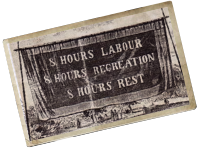
1855
8 hour day - as part of a 48 hour week. The achievement of the 8 hour day on two Sydney building sites in 1855 was a world first! In 1856 it was also won by Melbourne building workers and in the following decades the 8 hour day flowed onto every worker in Australia.
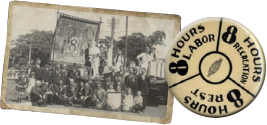
1875 - 1920
44 hour week - Bricklayers played a prominent role.
1897
First workers’ compensation legislation in Australia.

1902 - 80's
Amenities campaign - the fight for decent toilets, lunch rooms and in some cases shower facilities was a long hard fought battle that we won. Up until then workers were forced to endure primitive, squalid conditions on building sites.
1902
-
First building industry safety legislation in NSW.
-
The scaffolding and lifts act - Government safety inspectors introduced after years of campaigning.
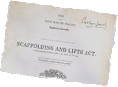
1904
-
First building industry safety legislation in NSW.
-
The scaffolding and lifts act - Government safety inspectors introduced after years of campaigning.
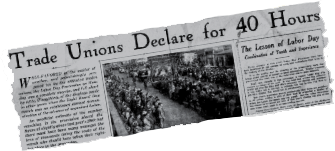
1935
- The 40-hour week - a campaign for a 40-hour week was initially started by Queensland painters back in 1912 who wanted to reduce the amount of time they were exposed to the toxic substances in the paint of those times.
- In 1920 Melbourne building workers went on strike over the issue and in 1927 the QLD carpenters, builder’s labourers, bricklayers and painters’ unions were deregistered over the issue - they finally won in 1935.
1935 - 43
1-week annual leave.
1938 - 44
2-week annual leave - until the mid 1940’s workers who had annual leave in their award were not entitled to sick leave, and those who had sick leave were not entitled to annual leave - go figure!
1942 - 56
Wet weather pay was introduced.
1944 - 45
Brick hod banned.
1947 - 69
Paid public holidays.
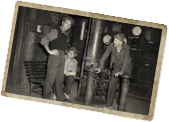
1951 - 74
Long service leave introduced.
1953
Height money.
1954
Site allowance
1956
-
Banning lead paint.
-
Multi-storey allowance.
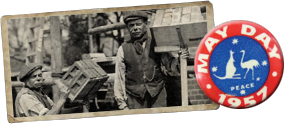
1957
Compulsory safety helmets.
1958 - 63
3 weeks annual leave.
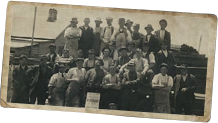
1959
First job safety officer on site.
1960
Industry allowance.
1961
Lofty crane driver’s agreement.
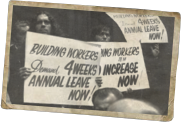
1962 - 74
4 weeks annual leave.
1971
Accident Pay (full pay on compo) - prior to this, building workers only received a percentage of weekly pay when off injured. Won following a 3-week general strike of the NSW building industry led by the BWIU and starting on the Sydney Opera House site. Then flowed on to all other Australian workers.
1971 - 74
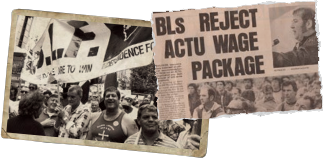
Original BLF Green Bans - an action strategy that stopped a lot of Australia’s historical buildings being turned into rubble. Here in WA the BLF placed Green Bans on the historic Palace Hotel in St. Georges Terrace, Victoria Hall in Fremantle and helped to save the original Peninsula Hotel in Maylands. Actions also helped to preserve much of Fremantle’s heritage.
1972
-
First full-time job safety officers on site.
-
Banning overhand brickwork.
1974
17.5% annual leave loading.
1975
-
Paid rates award.
-
10 days paid sick leave.
-
Daily hire replaces hourly hire.

1980's
-
Asbestos banned.
1981
38-hour week and the beginning of RDOs - Rostered Days Off.
1983
Banned, riding the crane hook - NSW last State to do so after years of campaigning against it.
1984
Industry superannuation plus mortality and disablement insurance.
1988
Top-Up workers compensation insurance.
1989
-
Redundancy pay as an award right.
-
WACIRF started collection of entitlements.
1991
Paid leave for Union Delegates.
1992
CSTC registers as a training organisation to provide much needed industry training.
1994
-
24 union insurance introduced.
-
Industry superannuation plus mortality and disablement insurance.
1995
-
National redundancy scheme.
-
Union training levy was achieved in WA.
-
Low interest housing loans through C+Bus introduced.
1997
Portable sick leave.
1998
CSTC opens state of the art training facility in Welshpool - now provides training for over 5,000 people each year on average.
2004
-
The Mutual Benefit Fund commenced.
-
Leisure Travel.
-
Ambulance.
-
Funeral Benefit.
-
Journey Cover - through WACIRF (Now RediFund).
2006
-
Successful compensation settlement for James Hardie asbestos victims.
-
Counselling services commenced offered by ITIM (drug/alcohol/suicide etc.) through WACIRF.
2007
The CFMEU leads the way to abolish Australian Workplace Agreements.
2009
-
AWA’s abolished.
-
National OH&S Workplace Safety Laws.

2010
-
After a 30-year battle unions win 18 weeks paid parental leave.
-
Unions with the CFMEU at the forefront win the battle for workers to get paid some of their entitlements if their employer goes broke, under the GEERS system.
-
CFMEU introduces a benefit for members who lose their spouse from death to apply to help cover pre-school and after care child costs.
2011
Introduction of the Fair Entitlements Guarantee (FEG) - ensuring workers are paid their owed wages and entitlements when employers go bust. The CFMEU was instrumental in campaigning for its expansion and protection.
2012
National Licensing for Trades campaign - unions successfully lobbied for stronger regulation of building trades, protecting workers and consumers from unqualified operators.
2013
Fly-In Fly-Out (FIFO) Mental Health campaign - CFMEU and other unions expose mental health crises in FIFO workforces, leading to parliamentary inquiries and reforms in worker wellbeing policies.

2015
Silica Dust campaign begins - union-led awareness drives and safety standards to address silicosis risk among construction and stone workers.
2016
Wage theft campaigns gain national traction - led by unions including the CFMEU, prompting several states to criminalise wage theft and introduce tougher penalties for employers.
2017
-
Increased penalties for workplace manslaughter were introduced in Victoria and Queensland after years of union campaigning.
-
Modern slavery laws influenced by union advocacy on supply chain ethics and worker exploitation.

2018
-
CFMEU WA secures new Enterprise Bargaining Agreements (EBAs) with major contractors guaranteeing improved site allowances, redundancy pay, and stronger safety clauses.
-
Mental health and suicide prevention initiatives expanded across WA construction sites in partnership with MATES in Construction and WACIRF.
2019
-
Portable Long Service Leave expansion for casual and contract building workers.
-
Union wins full recognition for PTSD and other mental health conditions as compensable workplace injuries.
2020
-
COVID-19 safety and income protection measures - Unions forced governments and employers to implement site safety standards, paid pandemic leave, and job retention measures during lockdowns.
-
Job Keeper fairness campaigns ensured more workers received income support during shutdowns.
2021
-
Respect@Work reforms - Union pressure leads to stronger sexual harassment protections at work.
-
Industrial manslaughter laws introduced in WA after sustained lobbying by the CFMEU and other unions following preventable fatalities.
2022
-
National Secure Jobs, Better Pay Act - a major union-backed reform modernising bargaining rights, improving job security, and limiting casualisation.
2023
-
Union-led campaign delivers wage rises for apprentices and young workers under new national awards.
-
Energy transition jobs - CFMEU instrumental in ensuring renewable and infrastructure projects include fair wages, training, and local content clauses.
- EBA24 is launched to deliver better wages, conditions and job protections

2024
-
After relentless campaigning by the CFMEU and health experts, engineered stone was banned nationwide - a victory that began with the union’s fight right here in Western Australia.
-
Right to disconnect becomes law following years of union advocacy for work-life balance.
-
Portable entitlements extended to more workers across multiple sectors.
- CFMEU WA launches “Here for Good” strategy - reaffirming transparency, integrity, and accountability in representing workers.
2025
After an eight-year campaign by CFMEU WA, major reforms were passed to ensure workers accrue long service leave even if stood down or injured, terminally ill workers can access entitlements earlier, and overall governance improved.
WHAT ABOUT PAY RISES?
This list of achievements does not include the numerous wage claims and collective EBAs over the years that have helped union members to achieve a decent standard of living for themselves and their families.